
There is an easy way to describe Teen Patti: an Indian three-card game that became hugely popular online. There is also a more interesting way to understand it.
Bangladesh already has a long and varied card-game culture, including Twenty-Nine, Call Bridge, Getaway or Bhabhi, Rang or Rung, Hazari and Fish. Importantly, Teen Patti itself is also documented among card games played in Bangladesh.
That changes the question. Instead of asking why Bangladesh would become interested in an Indian card game, it is more useful to ask:
Why does a game strongly associated with India fit so naturally into a card-game environment that already exists in Bangladesh?
The answer has less to do with national borders than with game structure, familiarity and digital adaptation.
Teen Patti Is Part of a Much Larger South Asian Card Tradition
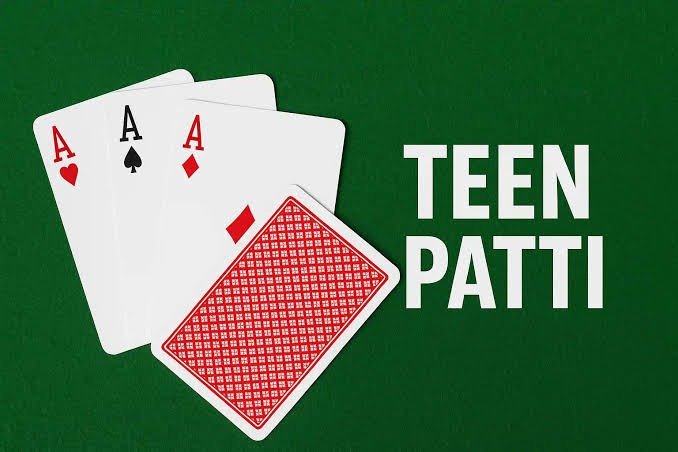
The name itself provides the first clue. Teen Patti literally means “three cards.” The traditional game uses a standard 52-card deck, deals three cards to each player and uses hand rankings alongside betting. Pagat describes it as an Indian gambling game and notes its close similarity to the British game Three Card Brag. That makes its identity more complicated than the label “Indian poker” sometimes suggests.
The Three-Card Connection
Teen Patti and Three Card Brag share a particularly interesting structural relationship. Both revolve around:
- Three-card hands
- Comparing hand combinations
- Betting during the hand
- A showdown between remaining players
- Variations in betting and play
Pagat describes Teen Patti as “almost identical” to Three Card Brag, while also documenting numerous Teen Patti variations involving wild cards, exposed cards and different betting limits.
That history matters because it demonstrates how card games evolve. A game can have a recognizable regional identity while still sharing structural DNA with games from elsewhere.
So when discussing Teen Patti, it is more accurate to describe it as a South Asian game with a strong Indian association than to imply that its entire cultural context stops at India’s borders.
Teen Patti vs Bangladesh’s Established Card Games
This is where the Bangladesh connection becomes much clearer. Pagat’s Bangladesh reference explicitly lists Teen Patti alongside several other card games played in the country. The same reference includes Twenty-Nine, Call Bridge, Getaway/Bhabhi, Rang/Rung, Hazari and Fish.
These games are not interchangeable. They represent several different families of card-game design.
| Game | Basic structure | What makes it different |
| Teen Patti | Three-card hand | Hand ranking and betting around three cards |
| Twenty-Nine | Trick-taking | Partnerships, bidding and valuable card points |
| Call Bridge | Trick-taking | Four-player bidding and tricks |
| Getaway/Bhabhi | Shedding game | Players attempt to get rid of their cards |
| Rang/Rung | Trick-taking | Trump selection and partnerships |
| Hazari | Hand comparison/partition | 13-card hands divided into smaller groups |
| Fish | Rummy | Drawing, discarding and forming combinations |
The differences are important. Twenty-Nine, for example, uses four-player partnerships and 32 cards, with the Jack and Nine carrying unusually high value. Pagat’s current reference also includes a specific Bangladesh variation.
Hazari takes another route: players use 13-card hands divided into groups of 3, 3, 3 and 4, with those groups compared during play. Call Bridge, meanwhile, is based on bidding and trick-taking and is normally played by four people. Against that background, Teen Patti looks remarkably compact.
Why the Three-Card Format Stands Out
Compared with those longer formats, Teen Patti has a much smaller information set:
- Three cards per player
- Immediate hand comparison
- Betting integrated into the hand
- No requirement to manage a 13-card hand
- No long sequence of tricks
- No partnership system in the basic format
That compactness is one reason the game translates so easily to a digital interface. But it also explains why its familiarity in Bangladesh should not be viewed as a completely foreign import entering an otherwise unfamiliar card environment.
It sits alongside games that already use many of the same fundamental ideas: cards, rankings, combinations, betting, comparison and probability.
The Bangladesh Connection Is Stronger Than the “Indian Game” Label Suggests
There is an important distinction between origin, association and distribution. A game can be:
- Strongly associated with one country.
- Played in neighboring countries.
- Adapted into local variants.
- Distributed internationally through mobile platforms.
Those four things can happen at the same time. In the case of Teen Patti, the available Bangladesh reference does not establish a specific historical route by which the game travelled from India into Bangladesh. It does, however, explicitly document the game as part of Bangladesh’s card-game landscape.
That is the stronger claim because it is supported by evidence. It also avoids a common mistake: assuming that geographical proximity automatically proves a particular transmission route.
Why Teen Patti Translated So Well to Mobile Gaming in India
The second part of the story happened on smartphones. Traditional card games had one major advantage when mobile gaming expanded: players did not have to learn an entirely unfamiliar concept before opening the app.
The basic logic was already recognizable. In 2017, The Economic Times reported that Teen Patti Gold had passed 2 crore downloads and that more than 22 lakh people played it daily at the time of the report.
Those figures are historical, not current 2026 usage statistics. But they are still useful because they demonstrate the scale that the category had already reached during India’s early mobile-gaming expansion.
What the Mobile Version Changed
The smartphone did not need to reinvent the basic game. Instead, software could handle the parts that were previously manual:
- Card dealing
- Hand presentation
- Betting controls
- Pot calculation
- Turn management
- Winner determination
- Settlement
That dramatically reduces friction. A player who already understands three-card hand rankings does not need to learn the entire logic of a new game before understanding the mobile interface.
This is one reason Teen Patti is an interesting case study in how cultural familiarity can reduce the learning barrier for digital games.
Why the Same Characteristics Matter in Bangladesh
Bangladesh presents an interesting neighboring-market case. Its documented card-game culture already contains several established formats. Pagat’s Bangladesh reference identifies games ranging from trick-taking formats to shedding games, rummy and hand-comparison games. Teen Patti fits into that ecosystem without needing to replace it.
Familiarity Works at More Than One Level
A Bangladeshi player encountering Teen Patti online may already understand several concepts that appear in other card games:
- A standard deck
- Relative card strength
- Hand combinations
- Comparing players
- Betting or stakes
- Bluffing or uncertainty
- Reading opponents
- Variations in house or table rules
That does not mean someone automatically knows the rules of every Teen Patti variant. It means the conceptual distance can be smaller. That distinction is important. Cultural familiarity does not equal complete rules knowledge.
Traditional Teen Patti vs Online Teen Patti
The physical and digital versions share a core idea, but the experience can be very different.
Traditional format
A traditional game typically involves:
- A physical deck
- Players handling their own cards
- A social table environment
- Player-managed betting
- Rules agreed by the group
- Potential local variations
Pagat notes that Teen Patti has developed numerous variations over time, including changes to betting limits and special-card rules.
Online format
A digital version can automate much of that process:
- Software deals the cards
- The interface displays the player’s hand
- Bets are entered through buttons or controls
- The software calculates the outcome
- The game enforces the specific rules of that version
- Additional digital features may be introduced
This creates an important rule:
Never assume that an online Teen Patti table follows every rule you remember from a traditional game.
Check the rules before playing
Players comparing versions should look at:
- Hand rankings
- Blind and seen betting rules
- Minimum and maximum stakes
- Betting increments
- Show rules
- Side bets
- Wild-card rules
- Payout conditions
- Whether the game is player-versus-player or against the house
- Whether the version is live or software-based
That last distinction is particularly important. Pagat notes that “Live Teen Patti” can also refer to a casino-style game where the player bets against the house rather than playing the traditional player-versus-player format. The same name can therefore describe substantially different experiences.
Why Teen Patti Shouldn’t Simply Be Called “Indian Poker”
The comparison is understandable, but it removes too much information.
Teen Patti vs Poker
Poker is a broad family of games with many different formats, betting structures and hand systems. Teen Patti has its own traditional three-card ranking system and betting culture. Pagat specifically identifies it as a game almost identical to Three Card Brag rather than simply treating it as a poker variant.
Teen Patti vs Blackjack
Blackjack is fundamentally a player-versus-dealer comparison based around reaching a target score without exceeding it. Teen Patti does not use that same objective.
Teen Patti vs Baccarat
Baccarat uses predetermined drawing rules and compares the Player and Banker hands. Traditional Teen Patti instead centers on players receiving three cards and competing through its own hand-ranking and betting structure.
Teen Patti vs Roulette
Roulette is not a card game at all. Its result comes from a wheel and numbered pockets rather than hand construction. The distinctions may sound obvious, but they matter because online casino categories often group games together according to broad labels rather than actual mechanics.
For someone researching Teen Patti, understanding its ruleset is more useful than simply placing it into a generic “casino card games” category.
The Three-Card Structure Explains Part of Its Digital Appeal
There is another useful way to look at the mobile transition. A game designed around three cards is relatively easy to display on a phone. Compare the information a player needs to process:
Teen Patti
→ 3 cards
Hazari
→ 13-card hand divided into groups
Twenty-Nine
→ 32-card deck, partnerships, bidding and tricks
Call Bridge
→ 13 cards per player, bidding and multiple tricks
The comparison does not tell us which game is better. It tells us why Teen Patti has a particularly compact interface problem to solve.
The digital version can put the player’s cards, current stake, available actions and opponent information on one screen without reproducing a complicated multi-round card-management system. That is a genuine design advantage.
What India’s Mobile Boom Actually Demonstrated
The historical Teen Patti Gold numbers from 2017 are valuable for another reason. The Economic Times reported that card games were benefiting from India’s expanding smartphone and mobile-data environment, with Teen Patti Gold already reaching more than 2 crore downloads and over 22 lakh daily players.
The lesson is not that those figures remain true in 2026. They don’t establish today’s market size. The useful lesson is that traditional card-game familiarity can become an asset when a market moves from physical play to mobile play. Technology changes. The basic mental model does not necessarily have to.
What This Means for Bangladesh’s Online Card-Game Market
For Bangladeshi users exploring online card games, the interesting part is not whether a title is technically “Indian” or “international.” The more useful questions are:
- Is the underlying ruleset already familiar?
- Is the online version faithful to the traditional format?
- What has been changed for digital play?
- Is the game player-versus-player or house-based?
- Are there side bets or additional features?
- Are the rules clearly published?
- Does the interface explain the available actions?
This is where a resource such as all casino sites Bangladesh can be useful as a comparison concept: players should compare the actual game and platform specifications rather than choosing solely because a familiar game name appears in a catalogue.
What Players Should Check When Finding Teen Patti Online
A familiar name is not enough. Before choosing an online version, work through the following checklist.
Game rules
- Is it traditional Teen Patti?
- Is it a modified variant?
- How are hands ranked?
- What are the blind and seen rules?
- How does a show work?
- Are there special cards?
Betting structure
- What is the minimum stake?
- What is the maximum stake?
- How frequently can the bet increase?
- Are there side bets?
- Are side bets optional or built into the format?
Platform details
- Is the game software-based or live?
- Who are you playing against?
- How are results settled?
- Are rules displayed before play?
- Is the game available on mobile?
Local considerations
For Bangladesh players, platform availability, applicable local rules, payment conditions and account requirements should also be checked independently. Familiarity with a card game does not tell you whether a particular online service is suitable or available in your circumstances.
The same logic applies when reading Bangladesh casino reviews. A useful review should tell readers what version of a game is being offered, how its rules work and what differs from the traditional format, not simply repeat that the game is popular.
The Bigger India-to-Bangladesh Gaming Story
The most interesting part of the Teen Patti story is not that one country invented or popularized a game and another country later discovered it.
It is the interaction between cultural familiarity and digital distribution. The pattern looks like this:
Established South Asian card culture
↓
Three-card game with a recognizable rules framework
↓
Strong Indian mobile adoption
↓
Digital platforms make the format easier to distribute
↓
The same game exists within Bangladesh’s documented card-game landscape
That sequence does not prove a single historical migration route. It shows something more useful: regional games can cross modern digital borders especially easily when players already understand the underlying form.
Teen Patti Fits Into Bangladesh Without Replacing Its Existing Card Culture
Bangladesh already has its own collection of recognizable card games. Twenty-Nine has its partnerships, bidding and trick-taking. Call Bridge adds another trick-taking format. Hazari uses 13-card hands divided into smaller groups. Getaway focuses on shedding cards. Fish represents a local rummy format. And Teen Patti appears in the same Bangladesh card-game reference.
That makes the regional picture much more interesting than a simple “Indian game enters Bangladesh” narrative. Teen Patti does not have to replace those games to become familiar. It can occupy a different position in the same broader card-game ecosystem. Its three-card structure makes it faster to understand, easier to represent digitally and culturally recognizable across parts of South Asia.
The real lesson is therefore bigger than the game itself:
Games travel more easily when the technology changes faster than the underlying cultural language of play.
India’s mobile-gaming experience demonstrates how quickly a familiar card format could scale digitally. Bangladesh’s documented card-game landscape shows that the surrounding region already has a strong foundation for understanding different card systems.
That is why Teen Patti can feel familiar to a Bangladesh player without requiring the claim that Bangladesh simply copied an Indian game. It is better understood as part of a wider South Asian card-game story, one that has moved naturally from tables and physical decks into smartphones and online platforms.
Leave a Reply