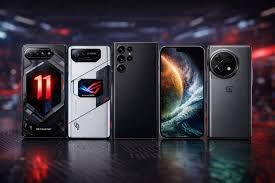
If you have picked up a flagship smartphone in 2026, you are likely staring at one of the most advanced pieces of glass ever made. Modern OLED screens are masterpieces of engineering, capable of hitting 5,000 nits of brightness and displaying billions of colors. But these screens aren’t just for looking at photos of your lunch. High-performance gaming apps are the real reason these panels exist. They push every single pixel to its physical limit.
The Stress Test of True Black
Britsino Casino is a great example of a platform where you can see this tech in action. When you load up a high-contrast game, your phone isn’t just “playing” a file; it is performing a complex dance of power management and light control that tests the very lifespan of your device.
The “Organic” in OLED stands for the carbon-based materials that glow when they hit electricity. Unlike old LCD screens that had a big light bulb behind them, every pixel on your 2026 phone is its own light source. This is why “Dark Mode” is so popular—it literally turns parts of your screen off.
Why Contrast is a Battery Killer
When you play a game with bright neon effects against a dark background, your screen has to work overtime. One pixel is completely dead (True Black) while the one right next to it is screaming at max brightness. This creates massive “thermal gradients” across the panel. In 2026, apps use this to create depth, but it is also the quickest way to find out if your phone has good heat management. If the screen starts to dim after ten minutes of play, you have hit the “thermal throttling” limit.
Color Volume and Saturation
Gaming apps today use the DCI-P3 color gamut, which is the same standard used in Hollywood cinemas. To show those deep purples and electric greens, the organic compounds in the screen have to vibrate at specific frequencies. Over time, the “blue” sub-pixels tend to wear out faster than others. This is why 2026 manufacturers have moved to “Tandem OLED” structures—stacking two layers of pixels on top of each other to share the load and keep your phone looking fresh for years.
Comparing 2026 Display Benchmarks
To see how your device stacks up, you have to look at the refresh rates and response times. A game that looks “choppy” isn’t always a slow internet connection; sometimes, it is the screen failing to keep up with the data.
| Display Tech | Max Brightness | Refresh Rate | Response Time | Common in 2026 |
| LTPO 4.0 OLED | 5,000 Nits | 1–144Hz (Auto) | 0.03ms | High-End Flagships |
| Tandem OLED | 3,500 Nits | 120Hz | 0.05ms | Pro Tablets / Phones |
| LTPS OLED | 2,000 Nits | 90Hz / 120Hz | 0.1ms | Mid-Range Devices |
| Mini-LED | 2,500 Nits | 120Hz | 1.0ms | Laptops / Gaming TVs |
The “Hertz” Race: Why 144Hz Matters
In 2026, we have moved past the 60Hz standard. Most top-tier gaming apps now support 120Hz or 144Hz. This means the image on your screen is refreshing 144 times every single second. For the human eye, this makes motion look as smooth as real life.
- Lower Input Lag: The faster the screen refreshes, the sooner you see the result of your tap.
- Reduced Motion Blur: In fast-paced slots or racing games, higher hertz keep the edges of symbols sharp.
- Variable Refresh Rate (VRR): Smart 2026 screens drop down to 1Hz when you are just reading text to save your battery.
Handling the “Burn-In” Myth
A big concern for players is screen burn-in—that ghostly image left behind if you play the same game for too long. In 2026, this is mostly a thing of the past. Modern OS updates include “pixel shifting,” where the entire image moves by one or two pixels every few minutes. You can’t see it, but it ensures that no single organic light-emitting diode is overworked. It is like a tiny workout for your screen that keeps it from getting “tired” in one spot.
The Role of High Dynamic Range (HDR)
HDR10+ and Dolby Vision are now standard in mobile gaming. These formats tell your screen exactly how bright a specific spark or explosion should be. When you are playing a game with high-end visuals, the HDR metadata is constantly talking to your phone’s processor. It is a high-speed conversation that ensures you see detail in the shadows without washing out the bright highlights.
Pro Tips for Preserving Your Display
Even with all this 2026 tech, you can still be a “power user” and keep your phone in top shape. It is all about balance. You want the best visuals without melting the hardware.
- Use Auto-Brightness: Let the phone decide when it needs 5,000 nits. Indoors, you rarely need more than 20%.
- Limit “Always-On” Displays: While cool, these can contribute to long-term wear if they feature bright, static icons.
- Check Your Refresh Rate: If a game doesn’t need 144Hz (like a slow-paced board game), drop it to 60Hz in settings to save battery.
- Keep it Cool: Avoid playing high-end games while the phone is charging, as the combined heat can degrade the OLED material.
The Future of the Digital Canvas
It is clear that the relationship between software and hardware has never been tighter. As developers create more beautiful worlds, screen manufacturers have to work harder to display them. In 2026, your smartphone isn’t just a communication tool; it is a high-performance monitor that fits in your pocket. Whether you are using it for a quick round of entertainment or a deep dive into a cinematic adventure, the OLED panel is the star of the show. By understanding how these apps push your hardware, you can appreciate the tiny marvels of science happening every time you unlock your screen. So, turn up the resolution, check your settings, and enjoy the most vibrant era of mobile gaming we have ever seen. Your eyes—and your high-score—will thank you.
Leave a Reply