A live dealer table looks simple on your phone, but a lot happens behind the scenes to put a real person, a real wheel and a real deck in front of you in under a second. Here’s a plain-English look at how it works, what’s different from standard digital tables and what to know before you sit down.
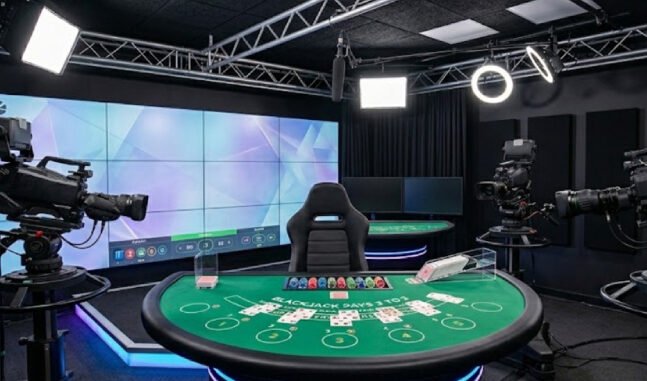
Somewhere in a studio, a dealer is shuffling a deck under bright lights while several cameras watch. A moment later, someone on a phone in another city sees the same cards, taps a chip onto a betting spot and waits for the next move. It feels instant. It’s actually a carefully timed production, and knowing how it works makes live tables easier to enjoy.
Live games sit in the same place as everything else in an Online Casino, a games lobby sorted into categories like roulette, blackjack, baccarat, game shows and poker. Betway’s casino games lobby is one example of a lobby that puts live dealer tables alongside the rest of its library. To be clear, this is an explainer for adults in places where these games are offered and it isn’t a promise of results.
What Actually Happens in the Studio
A live table is a real table. The dealer deals physical cards or spins a physical wheel, and cameras capture every move from several angles. For card games, card-reading technology captures each card as it’s dealt and turns it into on-screen data, so the picture and the game’s records stay in sync.
The scale behind that is bigger than most people expect. At Evolution, a leading supplier of live casino tables, around 22,900 people work in its studios across Europe and in North and South America and its latest quarterly report noted a second studio opening in Michigan. Studios run around the clock.
How a Round Reaches Your Phone
Video is streamed to your device with a delay that’s typically well under a second, which is what keeps the action feeling live. Each round runs on a timer. A betting window opens, a countdown runs and bets are accepted until it closes. After that, the dealer plays the round out and the result is shown.
That timing is the whole design. Because the window closes before the result is known, everyone at the table is on equal footing, whether they’re nearby or in another time zone. It also explains why a live round has a rhythm that standard digital games don’t.
Around the video you’ll usually find the tools that make a table readable: multiple camera angles, on-screen statistics, a history of recent results and, at many tables, chat with the dealer. The statistics are there for context. Every round still starts fresh, and past results don’t change what comes next.
Tables, Game Shows and First-Person Games
Most casino lobbies group live content into three kinds of games. Classic tables cover roulette, blackjack, baccarat and poker variants. Game shows put a host and a big wheel or a set of multipliers at the center, which is why they feel more like a TV show than a card room. First-person games are the digital cousins, with no dealer at all, just the same rules run by software.
Game shows are where much of the recent action is. Evolution’s latest quarterly report pointed to strong development in the game show category and said it launched Monopoly Live in four US states during the quarter.
Betway is a useful example. It launched dedicated studios with Evolution in February 2024, including one for roulette, blackjack, VIP blackjack and infinite blackjack tables, alongside a custom game show called Betway XXXtreme Lightning Roulette, which is exclusive to its players.
Practical Things Worth Checking
Minimum bets are often higher at live tables than at standard digital ones, and there’s a simple reason. Each table needs a dealer, studio space and streaming equipment while serving a limited number of players at once. Before you sit down, check the table limits, read the rules shown on the screen and look at how the round is timed.
If you’re new, spend a few rounds watching before you place anything. Watching a table for a few minutes shows you the pace, the layout and how the countdown works, so the first time you join a round it feels familiar.
Your connection matters too. A stable signal keeps the stream smooth, and many platforms let you lower the video quality if yours wobbles. If you want to learn how an online casino organizes the rest of its games, there are more plain-English casino explainers on the same site and you can read about us. They’re a good way to get comfortable before trying a live table.
Keeping It Fun
Live dealer play at an online casino is built around atmosphere, which makes it a good idea to plan ahead. Decide your budget and your session length before you join a table, and treat that budget as the cost of the entertainment. Licensed platforms typically offer deposit limits and session reminders, and they’re worth setting up on day one.
Strip it all back and a live table is a simple idea done with a lot of craft: a real dealer, a real result and a screen that puts you at the table. Once you know what’s happening behind the glass, you can pick a table, a pace and a budget that suit you, and enjoy the show.
Leave a Reply