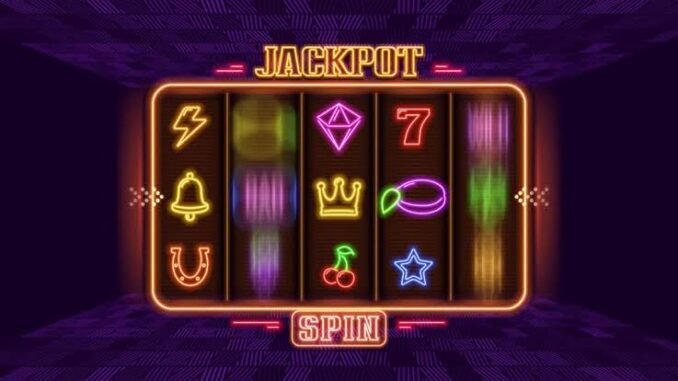
Pressing the spin button takes less than a second. The reels begin moving, symbols settle into place and the game displays the result.
Behind that simple action is a chain of software processes connecting the player’s browser or mobile device to the game server. Understanding that chain makes it easier to separate the technology that determines the result from the animation used to present it.
The Spin Starts With a Request
In a typical server-based online slot, pressing spin sends a request to the platform. The system checks information such as the selected stake, account balance and current game session.
If those checks are completed successfully, the game engine processes the round. The exact technical structure varies between providers, but the player’s screen generally acts as the interface while important game and account information is handled on secure servers.
This division serves a practical purpose. A phone or computer displays the controls, reels and effects, while the platform maintains the transaction record associated with the round.
The RNG Selects the Outcome
The result is produced using a random number generator, commonly shortened to RNG. The RNG generates values that the game’s mathematical model converts into a particular arrangement of symbols.
Each spin is treated as a separate event. Previous losses do not make a win due, and a recent win does not prevent another one from occurring.
Our guide to chance, design and attention in online slots explains how randomness creates the result while visual and audio design help the player follow what is happening.
The paytable and mathematical model determine how symbol combinations are valued. They also define features such as wilds, scatters, free-spin triggers and multipliers. The RNG supplies the random value, while the game rules determine what that value means.
The Reels Present the Result
The spinning reels do not normally perform a physical draw like the reels inside an old mechanical slot machine. They provide a visual representation of the outcome selected by the software.
This is one of the most useful points to understand about how modern online slots work. The technology combines random outcome generation with a separate presentation layer containing graphics, animation, sound and interactive features.
That distinction explains why two slots can look completely different while following a broadly similar technical process. One may use three simple reels and fruit symbols. Another may include expanding symbols, animated characters and several bonus screens. Their presentations differ, but both need software that generates a result and displays it according to defined rules.
Browser Technology Handles the Display
Modern browser games can run without the plug-ins once required by older web content. HTML, CSS and JavaScript can manage the interface, while technologies such as Canvas and WebGL support animated graphics.
MDN’s WebGL guide describes WebGL as a JavaScript API that renders interactive two-dimensional and three-dimensional graphics in compatible browsers. It can use the device’s hardware acceleration, helping web games produce smoother visual effects.
Developers must still account for differences between devices. A detailed animation that runs smoothly on a desktop computer may place greater demands on an older phone. Responsive layouts, compressed assets and adjustable effects can help the same game fit different screen sizes and hardware capabilities.
The Platform Records the Round
Once the outcome has been determined, the platform updates the account record. The stake is deducted, any return is added and the completed round may appear in the player’s game history.
This record becomes especially important if the connection drops while the reels are moving. A temporary interruption does not necessarily mean the round was never processed. If the server already completed it, reopening the game may retrieve the recorded result instead of creating another spin.
Players should therefore check the balance or transaction history before repeating an action after a connection problem.
RTP Works Over Many Rounds
Return to player, or RTP, describes the theoretical proportion of stakes a game is designed to return over a very large number of rounds. It does not predict what will happen during one session.
Volatility describes how returns are distributed. A lower-volatility game is generally designed around more frequent, smaller returns, while a higher-volatility game may produce less frequent but potentially larger ones. Neither measurement changes the independence of the next spin.
Final Thoughts
An online slot turns a simple tap into several connected processes. The platform checks the request, the game engine generates an outcome, the rules interpret it and the browser presents it through reels, sound and animation.
The player sees one smooth sequence. Underneath it, randomisation, account systems and browser graphics each perform a different job.
Leave a Reply